
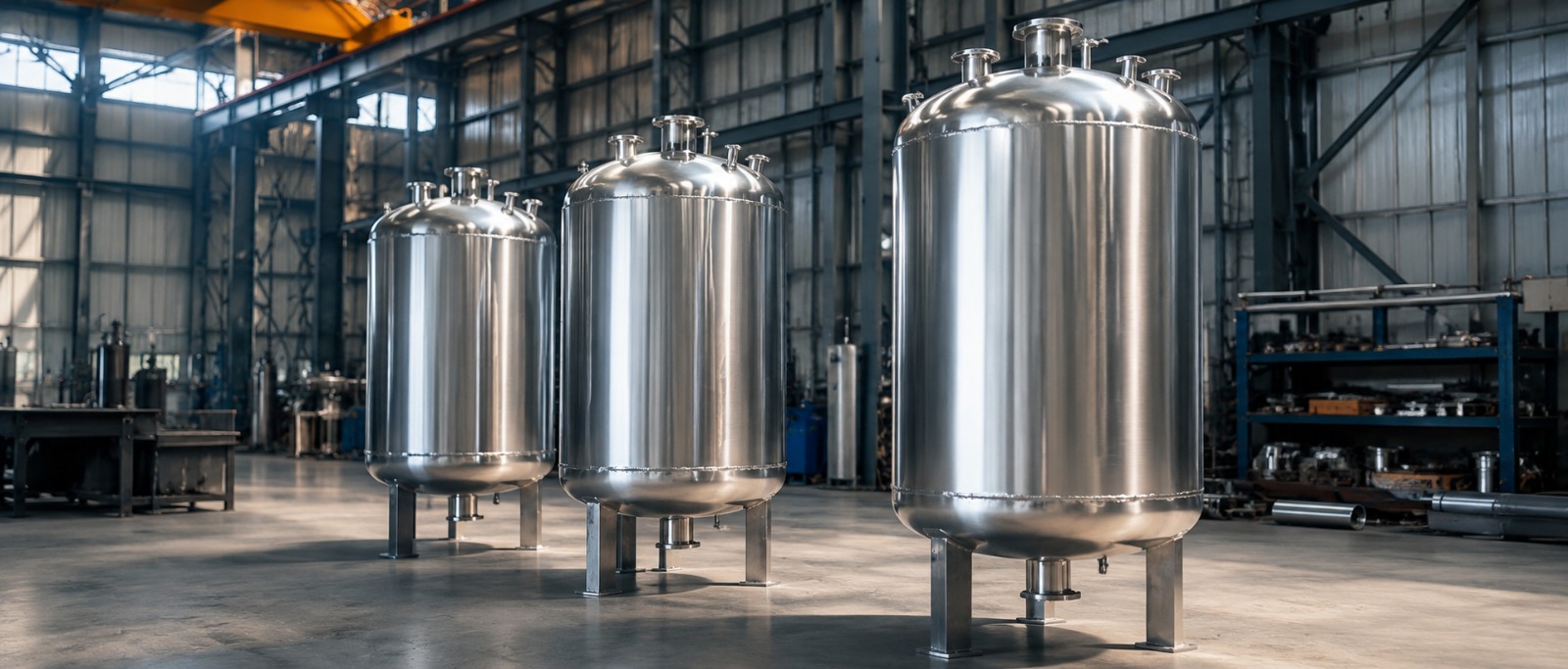
Engineering Support for Storage Tank Manufacturers
Storage tank design has its own governing codes, its own failure modes (settlement, anchorage, wind/seismic loading), and its own deliverable conventions, distinct from pressure vessels even where the same fabricator builds both. We support tank manufacturers and fabricators with the same five core services, scoped to atmospheric and low-pressure storage tank design.
Codes & Regional Compliance
- United States / global baseline: API 650 for welded atmospheric storage tanks; API 620 for low-pressure storage tanks operating above atmospheric but below the API 650 design pressure threshold.
- Canada: API 650/620 design basis combined with provincial structural and seismic load requirements, and CRN registration support where the tank scope includes pressure-retaining components subject to registration.
- Europe: EN 14015 as the European design standard for above-ground, vertical, cylindrical storage tanks, applied where API 650 is not the specified basis.
- Australia: AS 1940 and relevant state EPA/storage regulations for flammable and combustible liquid storage tank design.
- Seismic & wind: shell course and anchorage design checked against the seismic and wind load provisions of the destination region's applicable code, not assumed from a single default.
Design Checks Unique to Storage Tanks
- Shell course thickness calculations, varying by course height and hydrostatic loading
- Floor and roof plate design, including roof type selection (fixed, floating, internal floating) where specified
- Foundation and anchorage design, including anchor bolt layout and uplift checks under wind/seismic loading
- Settlement considerations and their effect on shell and floor design tolerances
Typical Deliverable Set
- Tank GA drawing with nozzle and manway schedule, BOM
- Shell, roof, and floor design calculation package to the applicable regional code
- Foundation and anchorage design documentation
- Fabrication drawings for shell plates, roof structure, and floor plates
Common Mistakes / Revision Triggers
- Anchor bolt layout mismatched against actual foundation drawings issued separately
- Nozzle projection clashing with external piping routed after the tank GA is issued
- Wrong regional wind/seismic basis assumed by default rather than confirmed against destination market
Common questions
Frequently asked questions
Do you work to API 650 or API 620?
Determined by design pressure; API 650 for atmospheric, API 620 for low-pressure tanks above that threshold.
Do you coordinate foundation design with our civil/structural team, or provide it directly?
Available either way, with anchor bolt layout always coordinated against the actual foundation design regardless of who produces it.
Can you support EN 14015 for European clients?
Yes, where API 650 is not the specified basis.
Connect with us
Get in Touch with Our Engineering Experts
-
K27, G Floor Rear Block, 9th Street, Ambattur Industrial Estate Chennai 600058 Tamilnadu India