
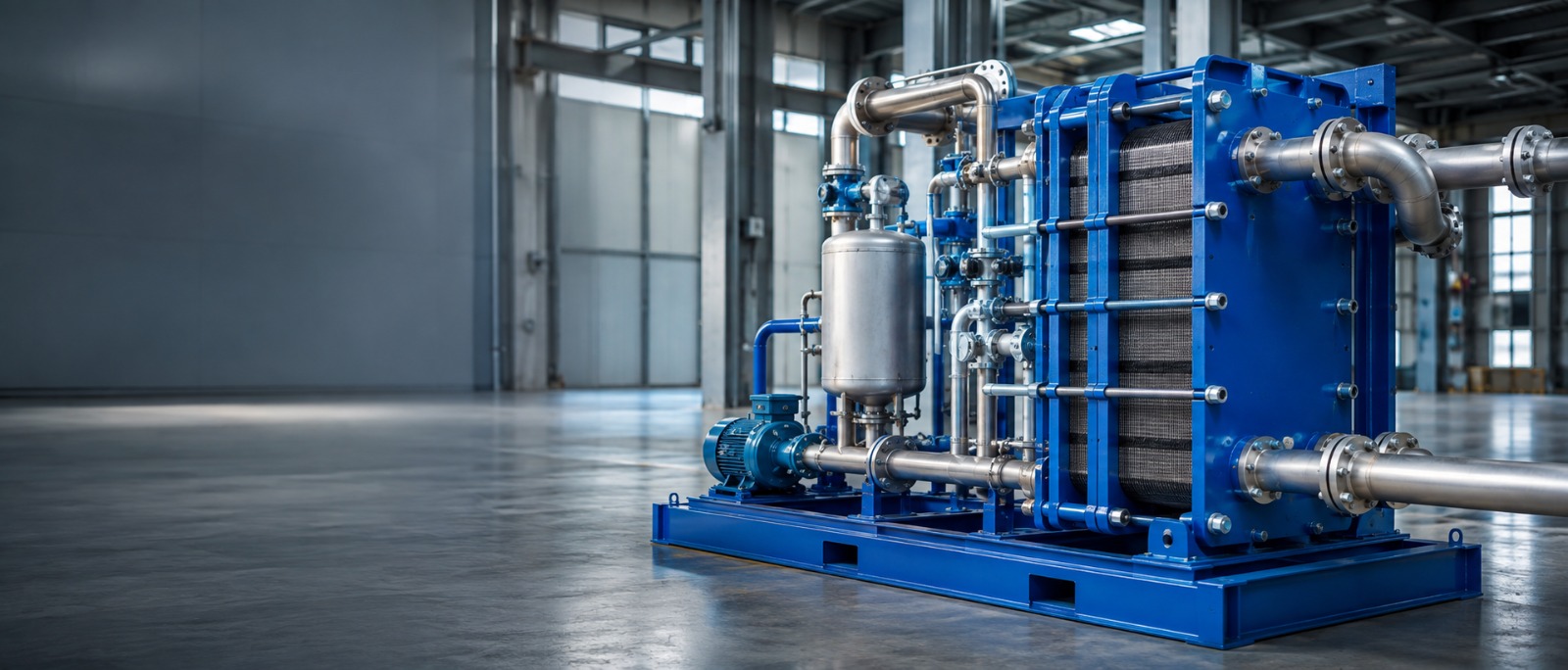
Engineering Support for Heat Exchanger Manufacturers
Shell-and-tube heat exchanger design carries two governing standards at once: the pressure boundary code and the mechanical design standard specific to exchangers. Getting the differential thermal behaviour between shell and tubes wrong is the most common source of in-service failure. We support exchanger manufacturers with mechanical design, calculation, and drawing scope across both standards.
Codes & Regional Compliance
- United States / global baseline: ASME Section VIII for the pressure boundary, combined with TEMA (Tubular Exchanger Manufacturers Association) standards for mechanical design. TEMA Class R, C, or B depending on service severity.
- Canada: ASME/TEMA design basis combined with CRN registration support for the pressure-retaining shell and channel components.
- Europe: PED categorization and documentation for the pressure boundary, with TEMA or EN 13445 mechanical design basis as specified by the client.
- Australia: AS 1210 pressure boundary compliance combined with TEMA mechanical design conventions where specified.
- Class selection: TEMA class (R for severe petroleum/process service, C for moderate commercial/process service, B for chemical process service) confirmed against actual service conditions rather than assumed by industry default.
Design Checks Unique to Heat Exchangers
- Tube bundle design: tube layout, pitch, and pass arrangement against the specified thermal duty.
- Tubesheet thickness calculation, accounting for differential pressure and thermal loading between shell and tube side.
- Baffle spacing, optimized for the specified flow conditions and checked against flow-induced vibration limits.
- Differential thermal expansion between shell and tubes, and whether the design requires an expansion joint or floating head to accommodate it.
Typical Deliverable Set
- GA drawing with tube layout and nozzle schedule
- Mechanical design calculation package to ASME/TEMA (or EN 13445 where specified)
- Fabrication drawings for shell, tubesheet, and channel components
- BOM covering shell, tube bundle, and channel scope
Common Mistakes / Revision Triggers
- Differential thermal expansion not accounted for, leading to tubesheet joint or shell-to-channel issues in service
- Baffle spacing not checked against flow-induced vibration limits for the specified flow rate
- TEMA class assumed from habit rather than confirmed against actual service severity
Common questions
Frequently asked questions
What TEMA class do you design to?
R, C, or B, selected based on service severity and confirmed with the client at project start.
Do you handle both mechanical design and thermal/rating calculations, or mechanical only?
Mechanical design and pressure-boundary calculations; thermal/rating duty is confirmed in scope at project start since it is sometimes provided by the client.
Can you support CRN or PED documentation for exchangers?
Yes, for the pressure-retaining shell and channel components.
Connect with us
Get in Touch with Our Engineering Experts
-
K27, G Floor Rear Block, 9th Street, Ambattur Industrial Estate Chennai 600058 Tamilnadu India